READING ROOM / PRACTICAL IDEAS
From a cultural plan to one useful local action
Translate a big discussion about Philadelphia’s creative future into a small, accountable project brief.
In this guide 6 sections
Read the 2026 report alongside its method
Cultural Dynamics was published by the Cultural Alliance in March 2026 following a project launched in November 2024. The full report describes community conversations, an online survey and collaborative interpretation during 2025. Its summary reports four conversations, 114 narrative survey responses and more than 500 participants across the process. These are engagement measures, not a representative vote by all Philadelphia residents. The recommendations concern stronger connections, visibility and support for creative work; their publication is not proof that a policy has been implemented.
Choose a difficulty you can actually describe
Start with a local observation rather than a slogan. An exhibition listing might omit a confirmed entrance, a joint programme might have conflicting dates, or a route might be too crowded for a visitor’s time budget. Verify the issue with the responsible organiser. Do not infer what every artist or neighbour needs from your own visit. The useful first sentence explains who encounters the difficulty, what is unclear and which source could resolve it.
Write a five-field action card
Record the issue, the person or organisation able to act, the proposed change, the resources or permissions required and the check you will make afterwards. Use a small deliverable: one corrected listing, one clearly credited shared guide or one confirmed access note. If the action needs funding or a venue’s permission, mark that dependency before making a public promise. A plan can be ready while its permission remains unresolved; it should not be advertised as delivered.
A complete illustrative action
Suppose two organisers agree that their joint listing has different start times on two pages. The issue is conflicting visitor information. The owners are the named contacts responsible for each listing. The action is to confirm one time and update both pages with the same date and booking route. The required resources are their agreement and access to the pages. The check is to read both public pages after the change and record the result. This is an invented example, not a project completed by Old City Arts or a partner.
Choose evidence that fits the action
For a listing correction, evidence is the verified information and the corrected pages. For a shared guide, it may be an approved brief, agreed credits and a distribution record. A modest administrative improvement does not establish higher attendance, increased revenue or broader inclusion. If a later outcome is measured, keep its period and method alongside it. Give the people involved an opportunity to correct how their role is described; do not imply endorsement of this website.
Make the next decision explicit
End the card with continue, revise or stop, and a reason supported by what you observed. A conflicting date that remains unresolved calls for another confirmation, not an optimistic launch. An accurate listing may close the task without requiring a bigger campaign. Keep the dated report as context and the action record as your own work. Return to the current organiser or public body for live opportunities and policies; neither the report nor this exercise announces a grant, a partnership or an open application.
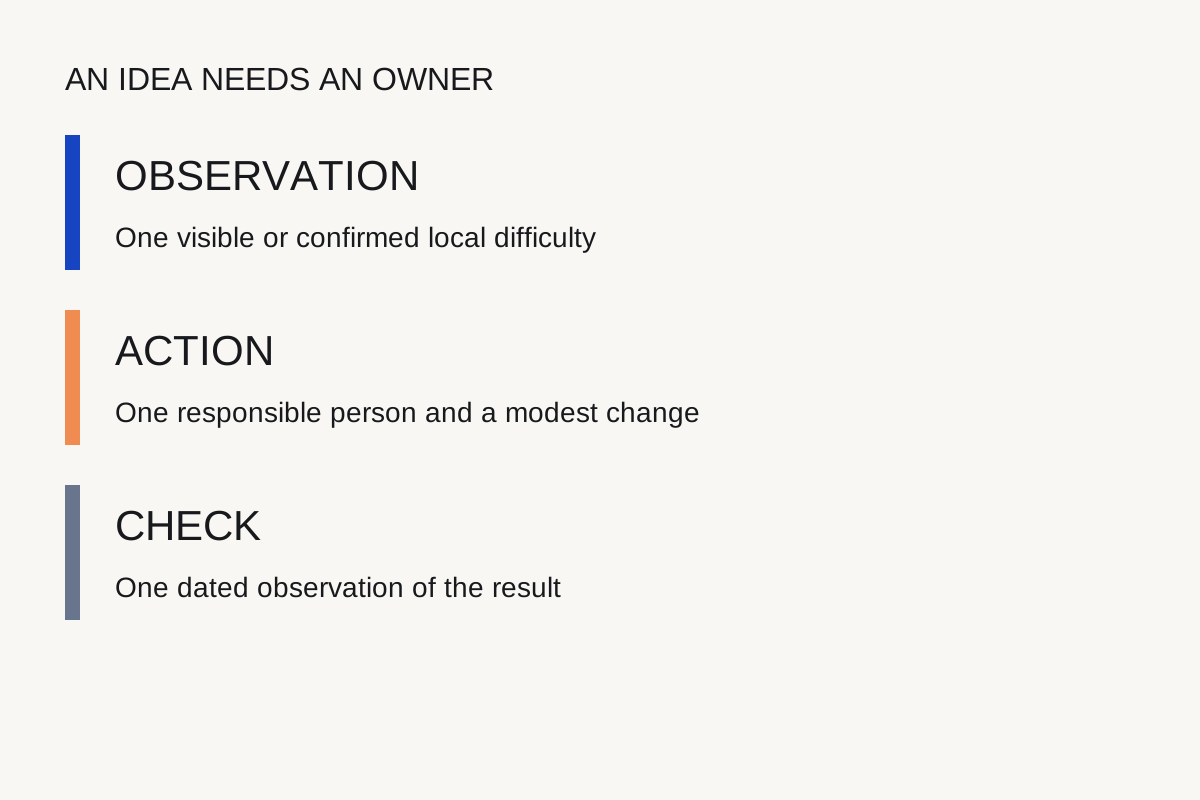
Take this method with you
- 01Observe
Describe one verified difficulty and whose task it affects.
- 02Act
Name an owner, a modest change and the required permissions.
- 03Check
Record a dated result and decide whether to continue or revise.