READING ROOM / PRACTICAL IDEAS
Public art and public records: read the decision, not just the debate
A practical method for following a cultural place through an agenda, a hearing and a recorded vote.
In this guide 6 sections
Identify the document before the claim
Find the issuing body, meeting date, agenda item, property and numbered pages. The September 14, 2018 Philadelphia Historical Commission minutes discuss the Painted Bride property at 230–36 and 238 Vine Street and 255 Bodine Street on pages 24–35. A separate city-hosted 371-page bundle contains the June 20 committee record beginning at PDF page 257. Its filename refers to a different property: a filename is not a reliable description of every document inside a bundle.
Follow the outcome to the next page
The September minutes record Richard Snyderman, identified as an Old City Arts Association founder, speaking in favour of designation. They then record a designation motion on page 34 and its failure on page 35: five opposed and four in favour, with one abstention. The committee’s recommendation and a speaker’s support did not become a successful designation vote. These are the actions recorded in that meeting, not a statement of the property’s present legal status.
Give each statement a status
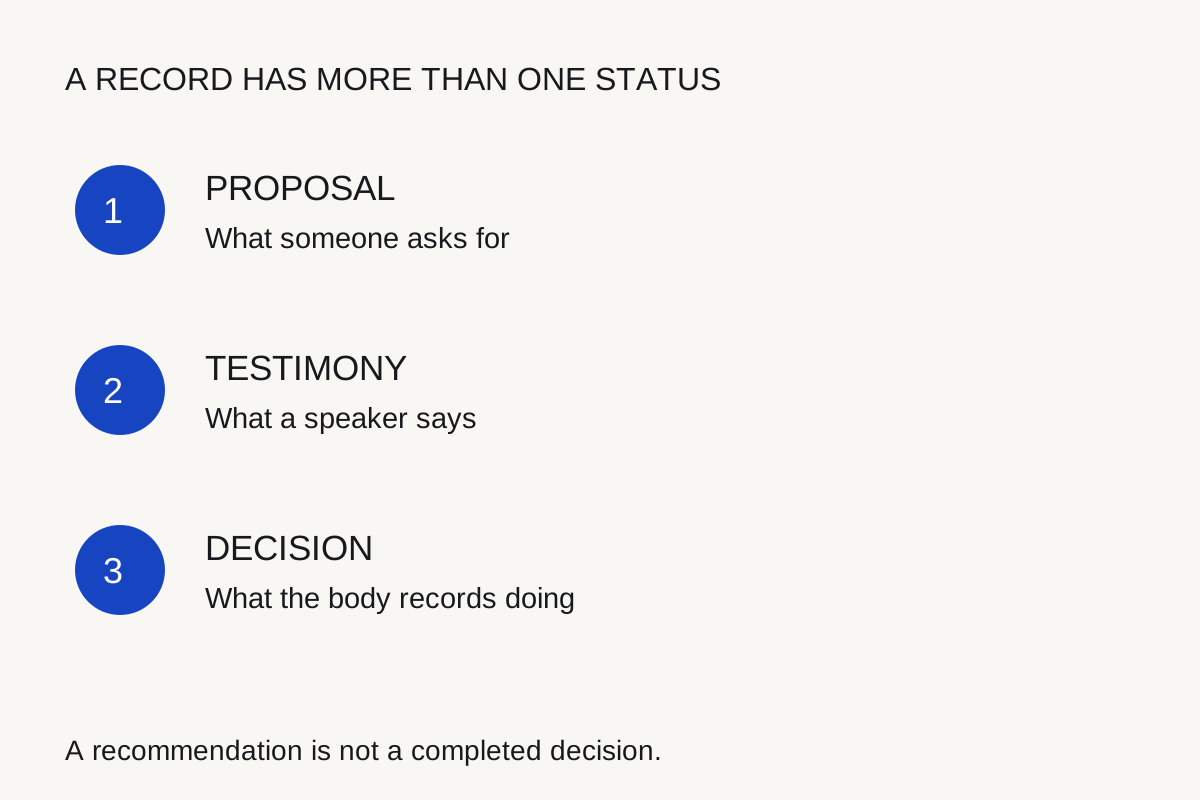
Use five labels in your own notes: proposal, recommendation, testimony, decision and follow-up. A conservation estimate offered by a speaker is testimony; it does not become an independently verified cost because it appears in public minutes. A recommendation is an input to a decision. A vote records what the body did at that meeting. A later appeal, permit or revised proposal can change the next stage, so read the sequence rather than one favourable sentence.
A complete evidence card
For the example above, record: body — Philadelphia Historical Commission; meeting — 14 September 2018; item — Painted Bride property; location — pages 24–35; support — named speakers in the minutes; action — designation motion failed; limit — the entry alone does not establish today’s ownership, condition, permissions or register status. Add the official PDF URL and the date you read it. This card is more useful than a headline saying that a preservation plan was either universally supported or permanently settled.
Take a question into a current visit
If an artwork or building raises a preservation question, start with something observable and a dated public source. You might ask, “Which part of the story is explained by this label, and where can I read the subsequent decision?” Stay in permitted public viewing areas. A public meeting document does not grant access to private property, authorize touching a work or establish that an organisation still occupies an earlier address.
Find what happened next without filling the gap
Search the official body’s later minutes, the relevant register and the current property or institution information. If no later source has been obtained, write “subsequent status not established by these documents.” Keep the earlier action accurately dated. Your finished note should allow another reader to distinguish a visible object, someone’s position and an institutional decision. It should also identify the one missing source that would resolve the next question.
Take this method with you
- 01Locate
Body, date, agenda item and the exact page.
- 02Classify
Proposal, testimony, recommendation or recorded action.
- 03Follow
Read the outcome and check subsequent official records.