VISITOR PRACTICE
Daytime or First Friday?
Choose the kind of attention you want to give the art.
In this guide 4 sections
An evening of encounters
First Friday can connect exhibitions with receptions and conversation. Confirm participation and hours individually. A busy evening may give you a broad introduction but less space for prolonged looking or detailed questions.
A quieter return
A daytime visit can let you spend longer with one exhibition, subject to the venue’s opening arrangements. Ask about quieter periods if crowding or noise is a concern. Never assume a gallery opens every afternoon.
Use both formats
On an evening visit, note one exhibition you would like to revisit. Return during confirmed opening hours with a specific question. The second encounter can reveal details that the first roomful of people made difficult to see.
Make a deliberate choice
If your goal is an introduction, choose a short First Friday circuit. If you want to compare surfaces, materials or works, arrange a slower visit. Families and visitors with access needs should confirm the conditions that matter to them directly.
Before leaving
- 01Check
Read the actual programme.
- 02Confirm
Transport, entrance and access.
- 03Save
Address and organiser’s contact page.
Ask for a quieter visit with a concrete question
“Accessible” or “quiet” can mean different things to different visitors. Ask about the conditions you need before choosing an outing. Old City District lists First Friday on 6 November 2026; that district event date does not confirm a particular gallery’s hours, entrance or participation.
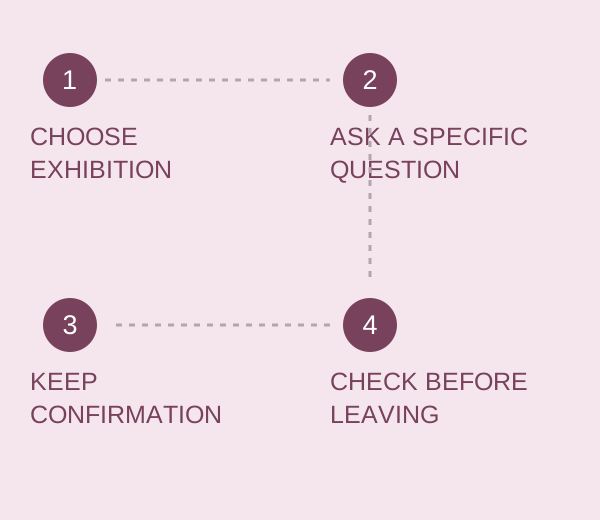
- Choose the exhibition and find the venue’s own current page. Record the exhibition dates and contact route. Use the district event listing as a discovery aid, then confirm the actual venue rather than assuming every gallery follows one schedule.
- Ask a specific question: lower-traffic periods, amplified sound, seating, a step-free entrance, lift dimensions or a suitable restroom. State what matters to your visit without being required to disclose a diagnosis.
- Keep the reply, date and any conditions in your visit note. If a critical feature is unconfirmed, make an alternative plan. A quieter daytime slot is a request, not a guarantee that an afternoon will be empty or open.
- Before leaving, check for a last-minute change and prepare one nearby alternative with its own verified information. In the gallery, follow staff instructions and keep clear of works and other visitors.
| Field | Example or check |
|---|---|
| Copyable enquiry | “I would like to see [exhibition] on [date]. Is there a lower-traffic time? Could you confirm [specific entrance/seating/sound question] and whether booking is needed?” |
| Record the answer | Venue __; exhibition __; proposed date/time __; exact feature confirmed __; reply date __; named official page __. |
| If no answer arrives | Leave the feature unconfirmed. Choose another venue or contact again; do not convert silence into an assurance. |
| Two-part outing | One confirmed exhibition plus optional short walk. Decide the stopping point in advance so a useful visit does not depend on completing a long circuit. |
| Day-of check | Opening/booking __; travel __; entrance __; contact __; backup __. No universal gallery hours, free entry or current display is asserted here. |
Use the organiser’s current listing and the venue’s own confirmation together. This procedure helps prepare a conversation; it is not an accessibility audit of Old City galleries.
Sources: Old City District — First Friday