READING ROOM / PRACTICAL IDEAS
Plan an arts visit around cost, time and the actual entrance
A usable budget and arrival checklist, informed by Philadelphia’s 2025 theatre-audience research.
In this guide 6 sections
What the research can tell you
The Cultural Alliance’s 2025 report separates 385 valid theatre-audience responses collected from December 2024 to May 2025, 491 metro-area public-poll responses from April–May 2025, and 117 organisational surveys collected in 2024. It identifies cost, time and getting there as participation barriers. These samples answer different questions; they are not a count of every resident or a forecast for one performance. The report states that the surveys and associated meetings were conducted in English.
Read the denominator in the technical tables
The technical report’s audience age table has 373 answers, while its theatre-choice table has 385. The difference illustrates why a report’s headline sample is not automatically the denominator for every question. Exclusions and unanswered questions matter. Use a result to identify a planning concern, then check your own arrangements. Do not tell a venue that a percentage describes its audience unless that venue and measure were actually studied.
Build the whole visit budget
Write separate lines for admission, booking charges, transport or parking, and any optional spending you decide to include. Confirm prices and concession rules at the actual venue. A free exhibition can still involve travel costs. If the required total is higher than your limit, choose a confirmed alternative or a shorter visit. Do not base the plan on a discount that you have not verified or on an old parking statement.
A complete hypothetical budget
Imagine an admission price of $20, a $3 booking charge and $6 for the return journey. The required total is $29; an optional $8 break would bring your chosen spending to $37. Those numbers are invented for this exercise, not current prices for a theatre, transit service or cafe. With a $30 limit, the $29 version fits on paper only after the real prices and access arrangements have been confirmed. Keep optional spending distinct so that the decision is clear.
Turn the programme into a time envelope
Record the performance start, its stated duration, your journey estimate, an arrival buffer and the last usable return option. For example, a hypothetical 7 p.m. start with a 30-minute journey and a 20-minute buffer means leaving at 6:10 p.m. A 90-minute performance would end at 8:30 p.m. only if it starts on time and the stated duration is reliable; an interval or delay changes the envelope. Verify the actual running time and service schedule instead of treating the example as a route recommendation.
Confirm the door, not just the address
Ask about the exhibition or performance entrance, stairs or step-free entry, seating, toilets and assistance you need. Check whether a booked place, queue or bag policy changes arrival. Save the venue’s current programme and official contact page. Your final one-page plan should show the required cost, the confirmed date, the arrival target, the return option and any unanswered access question. If one essential answer is missing, resolve it before travelling or choose a visit whose arrangements you can confirm.
Take this method with you
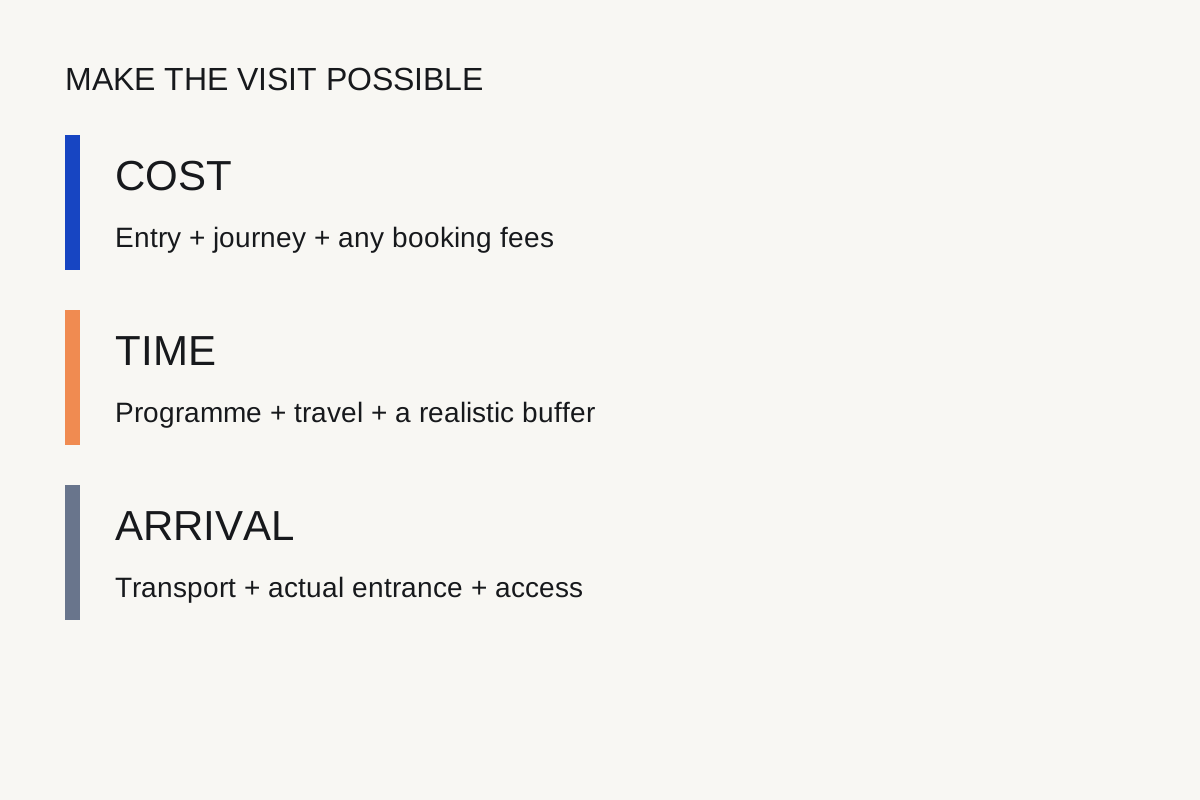
- 01Cost
Separate required entry and journey costs from optional spending.
- 02Time
Use the actual programme, travel estimate and arrival buffer.
- 03Access
Confirm the real entrance and the arrangements you need.